
Tag Archive for: Credit Score

MSHDA $15,000 Down Payment Assistance Program for First-Time Home Buyers

Note: Funds for this program have expired. Ask us about MSHDA’s $10,000 Down Payment Assistance program!

The Michigan State Housing Development Authority (MSHDA) introduced a new down payment assistance program for eligible, first time home buyers purchasing in the 49442 zip code.

The “Step Forward Down Payment Assistance” program is a $15,000 forgivable loan and is to be used in conjunction with the MSHDA MI Home Loan first mortgage for first time buyers.

We’re happy to introduce the program because, unlike the current MSHDA down payment assistance program, it’s a forgivable loan. In five years, if the borrower still occupies the home as their primary residence, the loan is completely forgiven. The loan is forgiven 20 percent each year until the five-year mark is reached.

Additionally, it’s a complete $15,000 and can be used towards the down payment, closing costs and escrows. If there is money left over, we will use it to reduce the principal loan balance on the new mortgage.

The new program can be used with FHA, Rural Development, VA and Conventional MSHDA MI Home Loans. According to MSHDA, the interest rate is typically lower than the other down payment assistance programs offered.

MSHDA allocated $20 million for the Step Forward Down Payment Assistance program and funds will be distributed on a first come, first served basis. The program is available in 61 eligible zip codes in 10 Michigan counties. The sales price limit follows MSHDA MI Home Loan guidelines and is $224,500 for the entire state. Contact us for a complete list of eligible zip codes.

The Step Forward Down Payment Assistance program will be available for new purchases on or after October 8, 2018. Eligibility is based on credit score, total household income, appraised value of the home available for purchase and more according to MSHDA guidelines.

If you have questions, or to see if you qualify for the Step Forward Down Payment Assistance program, give us a call at 231-799-2606. We’re here to help!

LOAN OPTIONS        |        MEET THE TEAM        |        CONTACT US

Could an FHA loan be the loan for you?

What is an FHA loan?

FHA stands for the Federal Housing Administration, which is a government agency. The FHA was created by the Housing and Urban Development Department (HUD) to increase homeownership in the U.S.

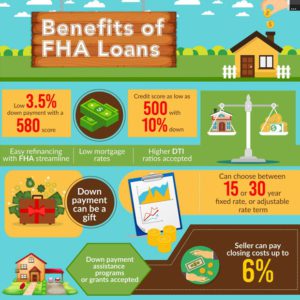
This loan was designed to allow more home buyers to qualify for home loans by allowing for lower credit scores and lower down payment requirements. FHA loans only require 3.5 percent down payment and in some circumstances, allow for credit scores as low as 580. The borrowers are required to pay mortgage insurance monthly (calculated at .85 percent of the loan amount) as post of the total payment.

FHA Credit Score Requirements

To qualify for a loan, the FHA may allow for credit scores under 580, but the borrower typically has to put more money down as most lenders do not wish to assume the risk, especially after the housing crisis of 2008. If your credit score is below 580, it is highly recommended that you improve your credit score before applying for a mortgage.

Who are candidates for FHA loans?

  • Borrowers with a low credit rating
  • Borrowers that cannot afford a large down payment
  • Borrowers using a gift for a down payment
  • Borrowers with high debt-to-income ratios
  • First time home buyers

Down Payment Requirements

Perhaps the most significant benefits of an FHA loan is the 3.5 percent down payment requirement. Many conventional programs require down payments ranging from 5 percent to as high as 20 percent.

As an example, if you are purchasing a $200,000 home, a private loan will require no less than 5 percent down, or $10,000. With an FHA loan, at 3.5 percent down, the down payment would be $7,000 for a $200,000 home.

Each home buyer has a unique set of circumstances that impacts the type of loan that will be best. Make sure you work with a local lender that spends the time to educate you so you are able to choose the best loan for your situation.

What determines my mortgage interest rate?

In the quest for a home, one of the first questions a borrower asks is: What is the interest ratee today?  The answer often times has to do more with the borrower then the lender. Surprised?

Here’s how borrowers can impact their interest rates.

  1. Credit Score: Lenders use your credit scores to predict how reliable you will be in repaying your loan and is the most significant variable in deciding your credit score. In general, consumers with a higher credit score receive a lower interest rate than those with buyers with lower credit scores. Mortgage rates vary considerably between credit scores of below 640 and above 740.
  2. Down Payment:  Because mortgage lenders see a lower level of risk when you have more stake in the property, a larger down payment can mean a lower interest rate. With 20 percent or more down, your interest rate will be lower. There are loans available with good interest rates that require PMI which is mortgage insurance to protect the lender in the event a borrower stops paying their loan.
  3. Loan Amount: Depending on the size of the loan, home buyers can pay higher interest rates on loans that are particularly high or low. The lender will have to adjust the rate due to the costs of a smaller loan and the risk factors that come with a large loan amount.
  4.  Loan Term or Duration: The term or duration is how long you to pay the loan back to the lender. Typically, shorter term loans have lower costs and interest rates, with higher monthly payments. Longer term loans will have monthly payments because they are spread out over a longer time period. Your Michigan Mortgage loan officer can analyze your unique situation to guide you to the best loan for you.
  5. Loan Type: There a number of loan types to choose from, all having different eligibility requirement.  Rates can vary significantly depending on what type of loan is chosen. The most common types of loans are known as conventional, VA, RD, and FHA loans. You can learn more about the different loan options by visiting our website at www.michmortgage.com.
  6. Home Location: Often times, lenders offer slightly different interest rates depending on the state they live in.  whether you are purchasing in a rural or urban area can also be a factor. So, it is important to talk to a local lender versus a national lender to get accurate rates.

There is no cookie cutter process to determine your interest rate. By understanding how your interest rates are determined will give you a better understanding of the best loan and interest rate for your unique situation. Michigan Mortgage’s highly knowledgeable loan officers can guide you to the very best loan for your needs.

How to Improve Your Credit Score

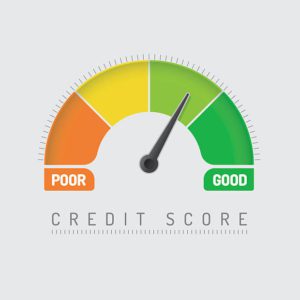
In today’s world, your credit score may be the most important number impacting your buying power. Can you purchase a home? Can you buy a car? Do you qualify for a credit card? Ask your credit score.

Whether you’re in the red or in the green, your credit score is key.

We sat down with our in-house credit expert, Loan Officer Jill Dobb, to talk more about credit scores and the impact they may have on your home-buying experience.

Michigan Mortgage: What elements of the home-buying process are affected by credit score?

Jill Dobb: Credit scores play a big role in all aspects of the home-buying process. First, it determines whether or not you qualify. It also determines the type of loan you qualify for and the interest rate associated with that loan. Your credit score will also determine if you qualify for a loan assistance program or are able to get a better rate on private mortgage insurance.

MM: If a customer is interested in working with us, what should be their target credit score?

JD: Typically, we like to see at least a 620 credit score for customers pursuing an FHA loan. We can be a little more flexible with a VA loan and service customers with a 600 score. We ask that our Conventional customers aim for a 680, but with a good mortgage history, we may be able to offer Conventional financing to customers with a lower score.

MM: If buyers fall short of our target credit score, what steps do you suggest they take to improve their score?

JD: A credit card, also known as a revolving line of credit, has the biggest impact on credit if you desire a quick turnaround. If you have a credit card, use it wisely. Always make your payments on time and keep a low balance compared to your card limit. For clients who do not have a credit card, we recommend that you get one right way and start using it. Remember, credit cards are a great tool to improve your credit, but if used inappropriately, they can negatively impact your score.

Shopping for your dream home is far more exciting than credit scores and mortgage loans, but both are equally important.

“Many times, shoppers get excited about a home rather than a mortgage, which is totally understandable,” Dobb said. “However, when they are not able to move forward with the process of actually purchasing a home, it causes them a great deal of frustration.”

In today’s competitive market, it is especially important to speak with a knowledgeable lender so you can actually find the house of your dreams and obtain financing.

To avoid the letdown, our goal is to establish a healthy relationship with each one of our customers. We aim to educate and offer advice for each client’s unique situation.

Michigan Mortgage is a division of Mortgage One, Inc. NMLS#129386